

1



Katja’s blog
First, some basics – what exactly are electrolytes and what role do they play in our body
In the human body electrolytes are very important. With their properties and especially their electrical charge, they are the basis of many chemical interactions in the body. Without their balance, there is no life. Every time we move, every time our heart beats, even when we think, there is a certain reaction behind these processes. Electrolytes are ions with an electric charge, which ensure that all these reactions take place in a coordinated manner and without complications.
Electrolytes regulate the body’s water content, cell metabolism and respiration, maintain buffer systems, enable the transmission of nerve impulses, ensure reproduction and growth of the organism. Electrolytes are introduced into the body through diet and fluids, but can also be taken through dietary supplements.
The most important electrolytes are:
And why are electrolytes especially important in the LCHF/KETO diet?
I often see posts from people who have changed their diet and are at the beginning of LCHF/KETO and are experiencing symptoms that they describe as:
“I’m dizzy, I have a headache, I feel extremely bad…”
“I have a terrible headache, is this normal…”
”I feel like I’m going to pass out at any moment…”
“I have terrible problems with constipation, everything hurts, every muscle separately…”
“I have painful cramps in my legs, especially at night…”
“I’m so tired, I feel terribly sick…”
“My heart beats so strangely, as if I had an arrhythmia…”
Or even “I got dizzy, I lost consciousness…”
I myself experienced all these feelings in the beginning (because I knew nothing about electrolytes) and unfortunately twice it ended even critically – I lost consciousness. Fortunately, I was not seriously injured, but it could have turned out differently. That’s why I always emphasize to everyone that they should take into account the increased need for electrolytes, especially at the beginning and of course also later, when the body is already adapted. All these symptoms described above can also be called KETO FLU (keto flu) and all of them can be prevented or mitigated by sufficient daily intake of salt and other electrolytes.
Why is there a lack of electrolytes in the LCHF / KETO diet?
On the LCHF / KETO diet, carbohydrates are kept to a minimum, which means that our pancreas no longer secretes as much insulin. As this happens, some hormonal signals might occur, which make sure that the kidneys excrete all excess water. And as the kidneys regularly excrete all the water from our body, they also excrete all the minerals and salts. Because that keeps happening all the time, our body might not get a sufficient amount of minerals and salts and it can therefore experience an electrolyte imbalance. The organism tells us this in the way and in the symptoms described above.
And what amounts of electrolytes are needed for a proper balance?
| element |
daily intake |
| Sodium | 5000- 7000 mg/day |
| Potassium | 1000 – 3500 mg/day |
| Magnesium | 300 – 500 mg/day |
Sodium (Na)
Sodium (Na) is an extremely important mineral. It is involved in fluid, electrolyte and acid-base balance. Although it is also naturally distributed in foods, its daily intake is largely proportional to the intake of table salt (NaCl). When we talk about sodium, we often talk about (table) salt.
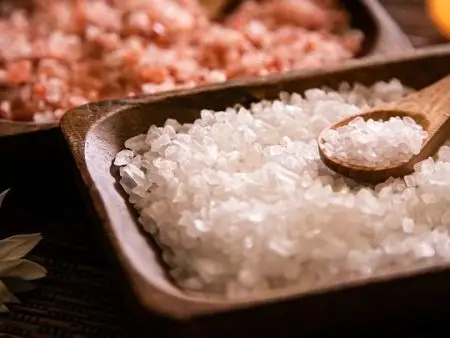
We probably all know that well-known instruction: use as little salt as possible, do not salt food excessively… This is partially true IF we eat “normal” food, i.e. rich in grains, sugars and carbohydrates. For most of the population, high salt intake comes from processed foods, high calorie intake and unhealthy fats. Over time, this manifests itself in obesity, metabolic syndrome and high blood pressure. However, since we are talking about a different way of eating, these statements about the harmfulness of salt are not true. On the LCHF/KETO way of eating, sufficient salt intake in the diet is crucial. Sodium can be replaced through the diet in several ways:
However, it is necessary to know that different salts contain different amounts of sodium. On average, 1g of salt is considered to contain 388 mg of sodium.
Potassium (K)
When it comes to potassium some care should be taken when adding it, as an overdose of potassium can be extremely dangerous. It can affect the heart rhythm, kidneys, metabolism, etc., therefore, when replacing potassium with preparations, it is necessary to take into account the amount of potassium consumed in the daily diet.
Most people immediately think of bananas and potatoes when they think of potassium. These are actually two great sources of potassium, but unfortunately they are not on the LCHF/KETO food list. Potassium can also be found in:
It is also necessary to know that the content of potassium is affected by the preparation of the dish – so if we boil the vegetables in water, most of the potassium will be in the water and not in the vegetables.
Magnesium (Mg)
Magnesium is absolutely necessary for more than 300 processes in our body, including protein synthesis, muscle and nerve function, regulation of blood sugar and pressure, … Magnesium helps with digestion, muscle cramps, headaches, etc.
A sufficient amount of magnesium can be provided by:
With magnesium, there is no need to fear an overdose, as with potassium, for example. The worst thing that can happen to you is digestive problems.
However, it is important to note something else. Many times, when people experience symptoms like those described at the beginning of this text, they resort to drinking huge amounts of water, thinking that this will help them get rid of a headache or dizziness. Huge amounts of water can make the situation even worse, as the water will flush out the last electrolyte reserves and our electrolyte balance will be even more affected as a result. Therefore, do not exaggerate the amount of water you drink, drink normally and enough.
Conclusion
Whether you’re just thinking about a LCHF diet or already eating this way, don’t forget about electrolytes and their importance. It is necessary to remember that:
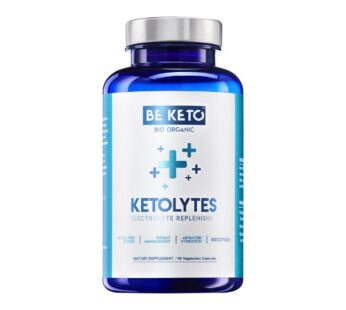
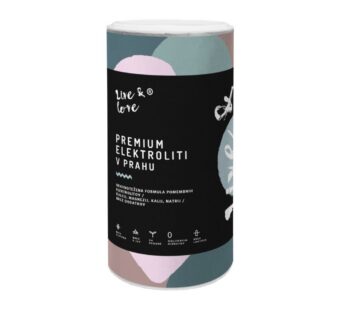
You can buy electrolytes in the form of a food supplement in our online store. You can also consume part of the electrolytes through multi formulas that are available on the market as well in our online store.
Sources:
http://www.nasa-lekarna.si/clanki/clanek/elektrolite-prosim-ne-elektrike/
http://elowcarbfoodlist.org/electrolytes-very-important-keto-diet/
https://paleoleap.com/all-about-electrolytes/
https://ketogenic.com/overview/importance-electrolytes-ketogenic-diet/
https://www.prehrana.si/sestavine-zivil/sol-in-natrij
https://sl.wikipedia.org/wiki/Elektrolit
28.12.2017, Katja, LCHF Style


You must be logged in to post a comment.