

1



Katja’s blog
The LCHF/KETO diet is more than just a way of life and an effective means of weight loss. In recent years, this way of eating has become a heavily researched area, and scientists are discovering new positive effects of ketones on health, metabolism, physical and mental fitness, and many other benefits. The KETO diet was primarily developed for the treatment of epilepsy, but its popularity has increased dramatically over the past decade.
Despite the advantages that the LCHF/KETO diet brings, it is a fairly restrictive form of eating and some people have considerable problems with getting into a state called KETOSIS where ketones get their true meaning. And for this purpose, scientists have developed exogenous ketones.
Endogenous ketones vs. Exogenous ketones
Every individual who is in a state of ketosis (we speak of ketosis when we measure more than 0.5 mmol/l of ketones in the blood) produces ketones – these ketones are called endogenous ketones – because they are produced inside our body, in the liver.
The level of ketosis can vary and depends on the purpose for which we want ketosis and its effects. Measuring ketones in the bloodstream (where BHB is measured) is a reliable method for determining the amount of ketones and for checking the effects of the keto diet.
How to interpret the results:
In the case of medical conditions that ketosis can help improve (mainly epilepsy, various neurological diseases, migraines…) we usually want to achieve deep ketosis. Normal (optimal) ketosis is sufficient for keto adaptation and accelerated fat burning. But it also depends on the individuals. Some get in and out of ketosis without any problems and achieve high values, but some (especially women) can have problems with these transitions.
You can read more about ketones (we know THREE types of ketones) and ways to measure ketones in the post: What are ketones?
Endogenous ketones are therefore ketones produced by our liver. How much and how they are produced depends on the individuals and, of course, on the way of eating. If we want to reach ketosis faster or if we want to deepen ketosis for certain reasons (physical or mental reasons…), we can also use exogenous ketones, i.e. ketones that are introduced into the body from the outside – as a nutritional supplement. Exogenous ketones basically consist of a ketone body (Beta Hydroxybutyrate or abbreviated BHB, which is structurally identical to the molecule produced by our liver) which is bound to various minerals (usually sodium, magnesium or calcium).
Beta-hydroxybutyrate, or BHB for short, is one of the three types of ketones that our body can produce. The other two ketones are acetate (acetone) and acetoacetate (AcAc). Strictly chemically, BHB is not a “ketone”, due to its molecular structure. But it is an important part and plays an important role in ketosis. AcAc and acetone are ketones in structure. Acetone is excreted by the body through urine or exhaled air.
Despite the fact that chemically speaking (due to its bonds) BHB is not a ketone, in connection with ketosis and its mechanisms it can be considered as a ketone, since it is closely related to the other two types of ketones and acts similarly.
BHB covers about 80% of the ketones found in our blood (that’s why when measuring ketones we measure BHB in the blood), the other two types of ketones are in the minority.
What is so magical about ketosis?
Ketosis, which is achieved by strictly reducing carbohydrates and/or fasting, has a whole range of positive effects on our organism.
One of the most powerful effects of ketosis on the body is that using ketones for energy (instead of glucose) is a much “cleaner” source. What does that mean? This means that in the process of using ketones for energy, less harmful by-products (free radicals) are produced and the oxidative stress for the organism is lower than when creating the same amount of energy from glucose. When burning ketones, more ATP molecules (energy for cells) are produced per unit of oxygen than when burning glucose. In a nutshell – we get much more energy with less “waste” if our organism uses ketones as a source of energy (fuel).
In addition to the above, ketosis and the ketones that are produced can also have a beneficial effect on the brain. Ketones pass through the brain membrane more easily than glucose. Related to this is, of course, the impact on better cognitive abilities, neurological diseases, the level of inflammatory processes in the body (because oxidative stress is lower and because there is no fluctuation of insulin), weight loss (due to burning one’s own fat),… There is a lot of research available on this topic (check the links at the end of the post).
Benefits of exogenous ketones (BHB salts)
You are probably wondering what the advantage of exogenous ketones – also called BHB salts is? Exogenous ketones are NOT a magic powder to conjure ketosis instantly. Nor are they an excuse to eat high-carb meals on a LCHF/KETO diet. Exogenous ketones are also not a weight loss aid.
But what exactly are exogenous ketones and how can they help with the LCHF/KETO diet?
1. Exogenous ketones can be an excellent supplement in the LCHF/KETO diet when we have problems with the transition to ketosis, with low ketone values, with keto adaptation and when we want a faster transition to ketosis.
2. Exogenous ketones are the icing on the cake when it comes to achieving the positive effects of ketosis for improving various health conditions or for additional energy during mental and physical stress.
3. Exogenous ketones can be an excellent addition in the prevention of keto flu, which usually occurs at the beginning of our LCHF/KETO diet, when the body runs out of glucose, but does not yet know how to produce ketones completely and in sufficient quantities. In addition, exogenous ketones are extremely rich in basic electrolytes, which also helps prevent keto flu from occurring.
4. Exogenous ketones have been proven to affect the hunger hormone (ghrelin) and thereby reduce the feeling of hunger.
5. Exogenous ketones are ideal before sports, physical or mental exertion, as they provide immediate energy. Many athletes (cycling and endurance sports) use them as a supplement.
6. BHB (in endogenous or exogenous form) very easily (and more easily than glucose) passes through the meninges (with the help of special transporters located in the meninges) and body fluids. This is why our brain works extremely well and uses ketones as fuel. The advantage of ketones is expressed especially well in people with neurological problems (there are huge studies on ketones and Alzheimer’s disease), epilepsy, migraines…
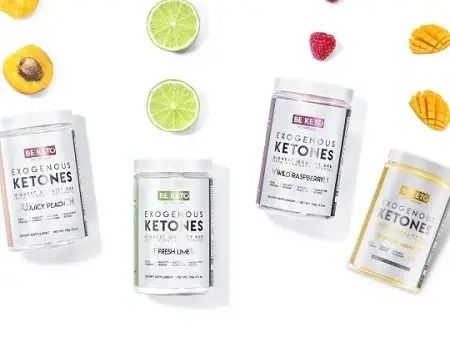
You can get exogenous ketones (BHB salts) in different flavors in our online offer. They are completely easy to use. Simply dissolve the intended amount (a scoop is included in the package) in water or your favorite drink. They can be added to shakes, smoothies, rehydration drinks…
Possible side effects of exogenous ketones
Exogenous ketones are usually in the form of keto salts or keto esters. BeKETO exogenous ketones are in the form of keto salts. This means that the ketone body is bound to one of the most common minerals (magnesium, sodium, calcium). In some people (especially those who are sensitive to the intake of magnesium and sodium), indigestion may occur if the product is overused.
10.05. 2022, Katja LCHF Style
Resources for further reading:
https://hvmn.com/blogs/blog/exogenous-ketones-beta-hydroxybutyrate-or-bhb-all-you-need-to-know
https://hvmn.com/blogs/blog/exogenous-ketones-ketone-salts-ketosis-with-a-cost
https://ketodietapp.com/Blog/lchf/ketones-why-are-they-a-better-brain-fuel
https://beketo.uk/what-are-ketones/
https://perfectketo.com/exogenous-ketones-for-weight-loss/
https://www.webmd.com/diabetes/ketones-and-their-tests
https://www.annualreviews.org/doi/full/10.1146/annurev.nutr.26.061505.111258


You must be logged in to post a comment.