

1




WHAT IS MCT OIL?
Do you know what the abbreviation MCT stands for? The abbreviation MCT is used as an abbreviation for the Medium-Chain Triglycerides, which means medium-chain triglycerides or medium-chain fatty acids. Medium-chain fatty acids are fats found in a variety of foods, including coconut oil. These fatty acids are metabolized differently by the body than long-chain fatty acids.
Triglycerides get their name from their chemical structure. All triglycerides consist of a glycerol molecule and three fatty acids.
Most of the fat in our diet consists of long-chain fatty acids containing 13 to 21 carbon atoms. Short-chain fatty acids have fewer than 6 carbon atoms. So medium-chain fatty acids (MCTs) are in between and contain 6 to 12 carbon atoms.
The main medium-chain fatty acids are:
The numbers with which the fatty acids are marked represent the length of the fatty acid chain. In this case, C6 is therefore the shortest fatty acid and C12 the longest. How quickly the fatty acid will be metabolized into energy depends on the length of the fatty acid.
The special feature of MCT fatty acids is their metabolism!
Due to their structure, medium fatty acids can be broken down and absorbed by the body very quickly and easily. Unlike long-chain fatty acids, MCT fatty acids are metabolized directly in the liver, where they are converted into energy or ketones. And since ketones are an extremely important source of energy in KETO or LCHF to the diet is MCT oil an excellent source of fat that aids in the production of ketones.
The difference between coconut oil and MCT oil
It often happens that classic coconut oil is advertised as MCT oil, which is quite misleading. Coconut oil contains fatty acids, but in much smaller quantities, and C12, or lauric acid, predominates. For the effective use and effect of medium-chain fatty acids (mainly C8 and C10), it is therefore better to use real MCT oil, which is added as a dietary supplement, while coconut oil can be used for cooking and baking.
How is MCT oil made?
MCT oil is a highly concentrated source of medium-chain fatty acids produced by a process called fractionation. MCT oils usually contain C8 octanoic acid (caprylic acid), C10 decanoic acid (capric acid), or a combination of the two fatty acids. In most cases, other fatty acids are represented in a minimal proportion. The most important sources of MCT oil are coconut oil and palm seed oil.
Benefits of MCT oil in LCHF/KETO diet
Use
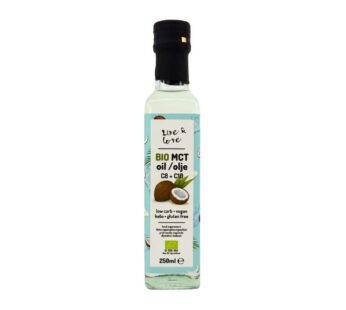
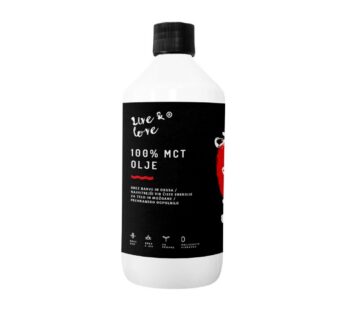
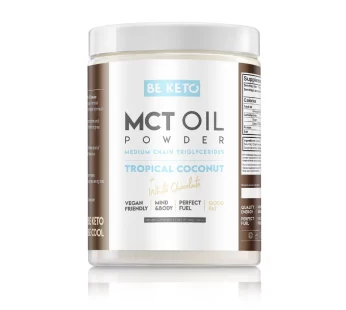
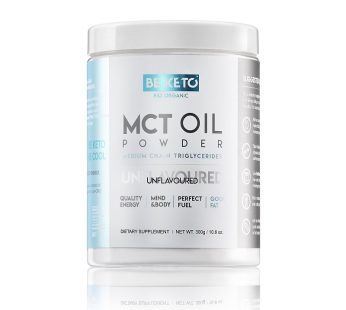
MCT oil is odorless and tasteless and therefore a very suitable addition to various beverages (coffee, tea, smoothies, shakes … ) and dishes (salads, soups, sauces …). It is added after cooking and is not intended for baking, as it has a low smoke point. It is a very welcome ingredient in homemade LCHF ice cream, as it makes the texture of the ice cream softer. It can also be used as an additive in “fat bombs”.
MCT oil is not only useful for consumption, it can also be used for cosmetic purposes. It works as an extremely good moisturizer for dry skin, it is also used for hair care and dandruff prevention.
Have you ever heard of the method of cleaning the teeth and oral cavity with the help of oil gurgling? Because MCT oil is tasteless is very suitable for implementing this method. It is an old Ayurvedic technique, with the help of which we take care of oral health and detoxification of the entire body. The oil we slurp draws harmful bacteria, fungi and other organisms from the mouth, teeth, gums and even the throat. You can read more about how to do this method online.
Dosage
MCT oil is completely safe for consumption and can be taken as a supplement from 1x – 4x a day, one tablespoon (15 ml). It is recommended to start with a smaller amount (1 teaspoon) and gradually increase the amount so that the organism slowly adapts. Otherwise, digestive disorders may occur.
Conclusion
As already mentioned, MCT oil is full of interesting properties if consumed regularly. There are practically no negative side effects. It is necessary to take into account a gradual increase in the daily intake, so that the organism gets used to it. Otherwise, slight indigestion may occur, as a larger amount of MCT oil can have a laxative effect. However, some people value it precisely for this quality and consume it to help regulate constipation.
Consumption of MCT oil can be very effective for anyone who wants to increase energy levels, improve metabolism, regulate hormonal balance, improve cognitive abilities and reduce the risk of inflammatory processes in the body.
Sources:
https://articles.mercola.com
https://blog.livehelfi.com/en/10-benefits-of-mct-oil-medium-chain-triglycerides
https://drjockers.com/5-reasons-to-use-mct-oil-for-ketosis/
https://www.charliefoundation.org/explore-ketogenic-diet/explore-2/mct-oil-diet
Ajša Krajnc: Kokosovo olje, Mastno, nasičeno in zdravo, Založba Ara (2014)
18.11.2017, Katja, LCHF Style


You must be logged in to post a comment.